Lights Out
By Keith Michael
And all shall be well, and all shall be well, and all manner of thing shall be well.
Lady Julian of Norwich

The iconic Kerjufell and Kerjufellsfoss. All photos by Keith Michael.
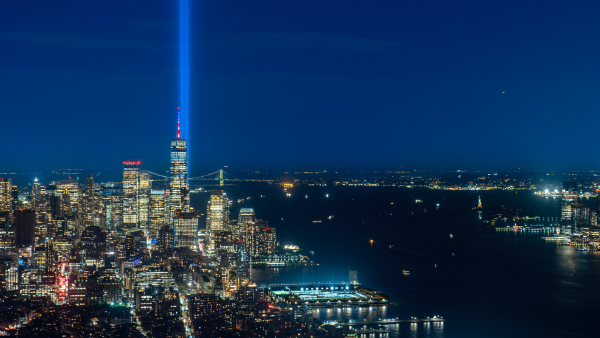
The sun is slanting into fall with the season pushing toward Lights Out NYC to help safeguard migratory birds navigating through our blinding metropolis. I spent August trekking toward a different kind of Lights Out: the total solar eclipse in Iceland.
Iceland was always, arguably, a precarious destination to see the eclipse. Totality would only be visible from the northwest peninsulas, the totality was relatively short compared to the North American eclipse of 2024, and Iceland’s weather is notoriously fickle. But, hey, no matter what, I’d be in the primordial wonderland of Iceland!
It was a trade-off missing the summer birds of NYC, but I had success in seeing at least 42 species in Iceland, roughly half of their regular summer birds. (Maybe it’ll be more after I go through my photos.) Along the way there was a surfeit of photogenic waterfalls, ancient lava fields, volcanoes, glaciers, geothermal vistas, and a constant parade of ethereal landscapes. Kerid, Nauthusagil, Eyjafjöll, Seljalandsfoss, Katla, Afréttisg, Múlakvish: names from fantasy novels. Reykjavik is the hub of day tours to all the local sights and the famed Golden Circle. A whale and puffin cruise takes one out into the bay for Humpbacked Whales, acrobatic White-beaked Dolphins (a new cetacean for me) and, yes, Atlantic Puffins that nest on the harbor islands by the tens of thousands. These windup-toy birds whizz by, spreading glee with their comical charm.

Eclipse Day was still two weeks away. Like in NYC, of course, the long-range weather forecasts couldn’t be taken seriously. Just look.
A five-minute ferry ride from Reykjavik is the island of Videy. Wild heaths, cliffs, and tidal coves yielded five new birds: Black-tailed Godwit, Eurasian Whimbrel, Common Redshank, Black Guillemot, and Meadow Pipit. Even their names evoke the mysteries of their far northern world. All the while, resident Lesser Black-backed Gulls gave disapproving swoops warning that their fledglings were nearby.
Day by day, the weather for Eclipse Day was checked and rechecked. Now the forecast’s clear. Now it’s 98% chance of overcast skies and rain. Just keep looking.
Further afield, my photographic tour took me along the south coast, then sliced northward through the formidable barrens of the Highlands. One fantastical moonscape panorama after another scrolled past the bus windows. Ever more waterfalls: Pjófafoss, Bruarfoss, Hafragilsfoss, Dettifoss, Godafoss. Avian highlights included a tourist-complacent Common Snipe probing the edge of the turquoise mirror pool in a volcanic crater, a mythical Gyrfalcon hunting over a meadow, stiff-winged Northern Fulmars careening through the mists of thundering cataracts, and outside a hotel window, Short-eared Owls hooting to each other in the midnight twilight.
After a guidebook’s roster of sights to behold, a long east to west travel day took us toward our eclipse viewing destination: the tip of the Snaefellsnes Peninsula, northwest of Reykjavik. Our location scouting on the cloud-free “evening before” swung by the iconic Snaefellsjökull volcano and Kerkjufell rock formation and falls. That night, I was lulled to sleep amidst a seaside Arctic Tern colony.
The satellite map for The Day was, indeed, dreary: overcast with a solid storm brazenly passing through at eclipse time. Nevertheless, hoping for a prescient break in the clouds, we set up early for a good spot at Lóndrangar. The postcard-perfect vista overlooked a sweeping sea stack amphitheater with hundreds of nesting Black-legged Kittiwake gulls circling below us sounding like a kazoo orchestra warming up. I picked out a few scattered nearly all-white Iceland Gulls among the crowd, my first seen in Iceland. The wind gusted. The rain started. Cameras were sequestered under plastic. Behind the clouds—the eclipse began. Over the next hour, the celestial light was on a timed dimmer. The temperature plummeted. The combined gravitational pull of the sun and moon slammed the surf against the rocks. The dark sea and roiling sky fused. The Kittiwakes’ chorus rose to a scream. 10, 9, 8, 7, 6, 5, 4, 3, 2, 1. The switch was turned off. A complete theatrical blackout with no exit signs. Absolute. Darkness. You’ve likely seen video clips of the cheering eclipse-celebrants from Spain. Here, it was a humbling pitch-black hush with a groin-tingling chill. The wind, the waves, the Kittiwakes, the total blackout. Fearsome. Haunting. Thrilling.
As a glow burned through from the east, it was as though time was being rebooted. Our world had held its breath and now, was rushing back—in a torrent.
I knew, then, I would be slower returning to NYC mentally than physically. Before leaving Iceland, I tracked down one more iconic Icelandic bird: the Eurasian Golden Plover, plumping up for its migration south. That helped.
The sun was shining when I landed at JFK. And I still hadn’t missed fall migration in New York City