
What to Know About NYC’s Five Ballot Proposals Ahead of Election Day
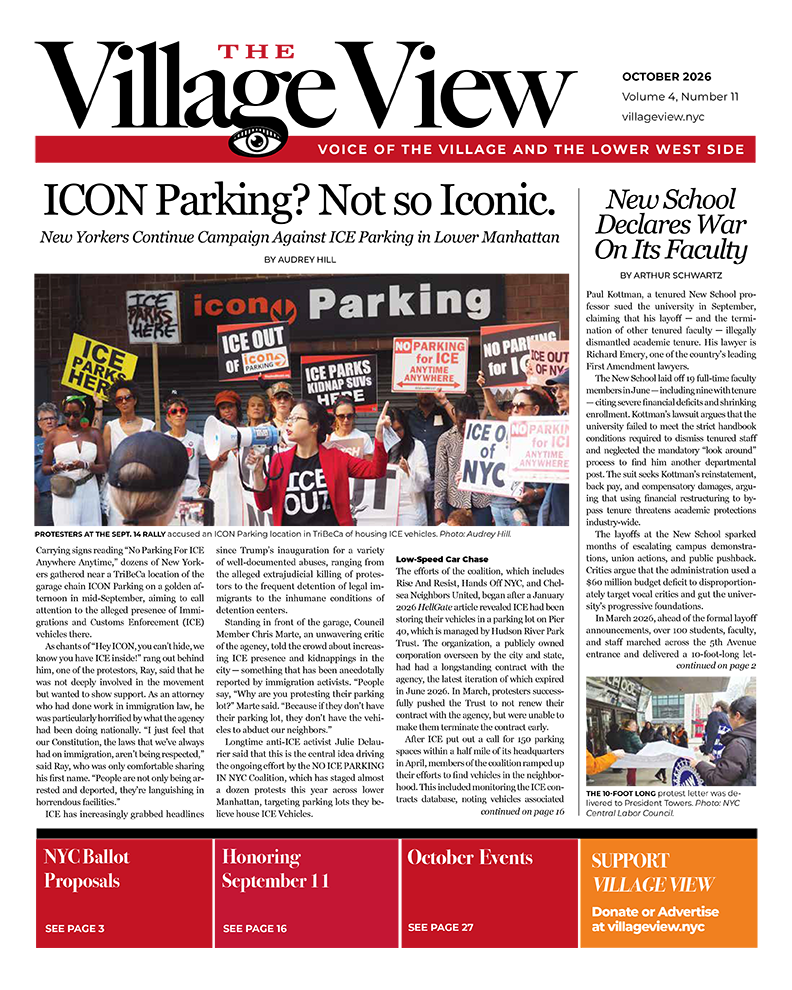
By Kaitlyn Schwanemann

Voters cast ballots on Election Day, Nov. 4, 2025. Photo: Ben Fractenberg/The City Reporter, used with permission.
This election cycle, there are five questions for voters — or five opportunities for New Yorkers to vote yes or no on amendments to the City Charter, a constitution that establishes the framework for city government. In this case, the 2026 proposals are part of an initiative at the top of Mayor Zohran Mamdani’s agenda: streamlining government processes and cutting red tape for small businesses. (Mamdani outlined these goals in his viral Halalflation video, lamenting city permit backlogs that drive up the price of a chicken over rice.) The Mamdani administration’s COGE — Commission on Government Efficiency — has taken the helm to propose and create the five ballot questions.
“Charter commissions are often seen as opportunities to think through how the structure of government works, and propose comprehensive solutions that might not easily be developed through the regular legislative process,” said Ben Weinberg, director of public policy at Citizens Union, an NYC civic engagement organization.
Susan Lerner, executive director of Common Cause New York, a nonprofit democracy watchdog group, urges voters to pay attention to local issues, even as election coverage focuses on who’s in control of the House of Representatives, or the governor’s race. “Every election is important, and for sure your opinion will not be reflected if you don’t vote,” she said. “Nobody hears your voice when you don’t speak, and voting is your voice.”
What are the proposals?
Unlike local laws, the Charter must be changed by a vote of the people directly because it can change the powers of government itself. The five proposals concern use of public space, city contracting, street safety, building permitting and the city’s rainy day fund. Convened by Mamdani in May, COGE developed the proposals after 10 public hearings across the boroughs in June and July, where the commission heard recommendations from community members and elected officials.
Proposal 1 would remove some steps from the process of getting permission from the city to use public space to build ramps, benches and outdoor dining structures.
This proposal comes after the City Council approved a package of bills to expand outdoor dining in August, including one bringing back year-round street sheds. As it stands, applying for an outdoor dining structure can take about three to five months, and a sidewalk cafe can take up to eight months. This proposal would combine the application process with the aim of cutting it down to two months.
To streamline the permission process, the proposal would also “remove the mandatory public hearing, modernize the public advertisement requirements and direct the Department of Transportation to use alternative methods to seek public input.”
Proposal 2 seeks to simplify the city contracting process by authorizing the mayor to award contracts, reduce paperwork for small businesses and nonprofits looking to work with the city, and reduce reporting requirements.
The proposal would cut down the procurement timeline by 12%, according to the COGE report. Procurement is the process by which the city picks organizations or companies to award contracts to. “The mayor has talked a lot about excellence in government, and part of that excellence is speed,” said Andrew Rein, president of the Citizens Budget Commission.
The changes would shave about 30 days off of the notoriously long process for completing requests for public work. The median time between the initial public announcement and when the work is awarded is 387 days.
In fiscal year 2025, nearly 40% of the city’s budget went to goods and services from outside contractors — or $42.3 billion.
Proposal 3 combines three measures that aim to speed up processes for transportation projects, the sale of some city-owned land and leasing office space for government workers.
The first piece of the proposal would remove some steps that delay major transportation projects, in hopes of speeding up street safety initiatives, including bike and bus lanes, by 33%. These include eliminating some requirements concerning intra-agency consultations, allowing the DOT to start working on projects before presenting to community boards and letting projects continue amid some procedural planning errors. It would also speed up the sale of small pieces of city-owned land — reducing the timeline from about seven months to 90 days. The expedited process would allow for multiple agencies to review certain sales or leases at once, without a final review from the City Council. Plus, the proposal would remove hearing requirements and approvals from the City Council and City Planning Commission when the city seeks to lease office space for its employees.
Proposal 4 seeks to create a centralized construction permitting system and move waterfront construction permitting to the Department of Buildings.
The proposal would authorize more city agency officials to approve construction projects and create a permitting “hub,” so that New Yorkers have to tap only one entity for approval, instead of multiple agencies. Plus, the DOB would gain control of permitting city-owned waterfront properties. Currently, the Department of Small Business Services handles permits for those types of structures. The proposal would also allow the DOB commissioner to appoint more officials who can approve construction documents.
Proposal 5 would set a goal of putting aside a rainy day fund equal to at least 12% of the city’s previous year’s tax revenue.
Until 2019, the city wasn’t authorized to maintain a rainy day fund due to state requirements, but a ballot proposal from that year changed the course. Since then, the Citizens Budget Commission has been rallying for a larger target for savings; a 2022 report from the comptroller’s office recommends 16% to support the city through the “full length of an average recession.” While Rein will be voting no on this proposal because he thinks the 12% benchmark is too low, he urges voters to push for a stronger rainy day fund that’s more resilient against a potential recession or economic crisis.
The proposal would also codify a state requirement that limits withdrawals to 50% of the fund, unless the mayor has a “compelling fiscal reason.”
Where do I learn more?
NYC Votes, the voter education arm of the Campaign Finance Board, puts out a voter guide annually which is now online, and will be mailed to voters in early October. The organization will post summaries of statements from both supporters and opponents of each proposal the week before early voting begins. You can also head to the COGE report to read the history, context and full details of each proposal. It can be found at nyc.gov/site/charter/reports/coge-reports.page.
Voting Calendar
Election Day is November 3. First things first: make sure you—and your friends and family—are registered to vote and make a plan to vote early if you can.
— Check your voter registration —
Go to the NYC Board of Elections
https://vote.nyc/page/am-i-registered
or call 1-866-868-3692
October 24: Last day to register to vote
October 24: Last day to request mail in ballot application
October 24: First day of early voting
Voting Locations:
North of W. 4th St.
IS70 373 West 17th St. (between 8th & 9th)
South of W. 4th St.
City as School, 16 Clarkson St.
(between Varick & Hudson)
East of 2nd Ave.
Campos Plaza Community Center,
611 East 13 St. (between B & C)
November 1: Last day of early voting
November 3: Election day (polls open 6 a.m.-9 p.m.)
Find polling locations and sample ballot at vote.nyc
This story was first published by The City Reporter September 23.





The 5 Ballot choices are too complicated for me. Hard to predict what the ramifications of the choices would be. Speeding up processes is good, but losing community control isn’t. That being said who the hell approved the monstrosity blocking the Empire State? If the Community board allowed that they’re either esthetically challenged or crooks!